
Why the Right Creative Partner Matters More Than Ever
In the hyper-competitive, trend-setting landscape of Los Angeles, high-quality video content isn’t optional it’s strategic infrastructure. Whether you’re targeting B2B decision-makers in Century City or launching a consumer campaign across Southern California, video is often the first and most influential touchpoint your audience has with your brand.
Los Angeles is saturated with video production agencies. Some specialize in cinematic brand films. Others focus on fast-turn social content. Budgets vary wildly. Capabilities are uneven. And a misstep can cost not just money but momentum. This guide eliminates guesswork.
You’ll gain:
- A practical, executive-level framework for evaluating agencies
- Clear budget expectations and ROI considerations
- Strategic questions to avoid costly mistakes
- A structured approach to briefing and vetting
- Confidence in making a high-stakes creative decision
By the end, you’ll have a disciplined, repeatable method to select a video production partner that aligns with your business objectives not just your aesthetic preferences.
1. Understanding Your Video Production Needs & Goals
Why Clarity Is King
Before you begin reviewing showreels or scheduling discovery calls, pause. The most common failure point in corporate video projects is not production quality it’s strategic ambiguity. If your objectives are unclear internally, even the best agency in Los Angeles cannot rescue the outcome.
Executives often approach agencies with a general idea “We need a brand video” but lack defined objectives, audience clarity, or success metrics.
This leads to:
- Scope creep
- Budget overruns
- Misaligned messaging
- Underwhelming ROI
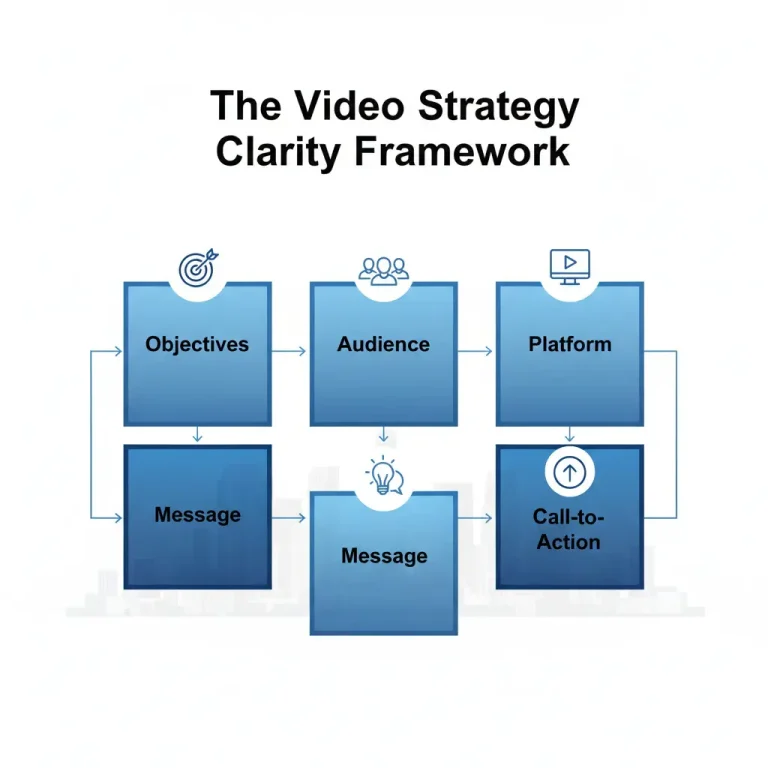
Establish strategic clarity before outreach. Think of this as building your internal investment thesis.
Defining Your Project Scope
Start with precision.
What Type of Video Are You Producing?
Different formats require different expertise and budgets:
- Broadcast or streaming commercial
- Corporate explainer video
- Social media campaign series
- Event highlight recap
- Customer testimonial
- Documentary-style brand film
- Recruitment or internal communications video
Each has unique production demands, timelines, and distribution strategies.
What Is the Primary Objective?
Be outcome-driven, not format-driven.
- Increase brand awareness
- Drive qualified leads
- Accelerate sales conversions
- Educate customers
- Improve employee engagement
- Promote a launch or event
If your objective isn’t measurable, it’s not strategic.
Identifying Your Target Audience
Your video is not for “everyone.” It is for someone specific.
Clarify:
- B2B or B2C?
- Industry or vertical focus?
- Demographics and psychographics?
- Stage in the buyer journey?
- Pain points and motivations?
Platform Considerations
Where will this video live?
- LinkedIn (B2B thought leadership tone)
- Instagram or TikTok (short-form, fast-paced)
- Website homepage (brand authority and clarity)
- Paid ads (conversion-focused messaging)
- Internal platforms (culture and values emphasis)
Platform dictates:
- Length
- Format (vertical vs. horizontal)
- Pacing
- Creative style
Crafting Your Key Message & Call to Action
This is where most projects dilute impact.
Ask Yourself
- What is the single most important message?
- What misconception must this video overcome?
- What differentiator should dominate?
Define Your Call to Action (CTA)
- Schedule a consultation
- Visit a landing page
- Make a purchase
- Download a resource
- Apply for a role
If the viewer doesn’t know what to do next, the video underperforms.
Establishing Your Budget Range
Let’s address this directly.In Los Angeles, professional video production can range from
- $5,000–$15,000 for small-scale projects
- $20,000–$75,000 for mid-tier branded content
- $100,000+ for high-production commercial campaigns
Your budget influences:
- Crew size
- Equipment sophistication
- Talent quality
- Locations
- Post-production complexity
- Animation and motion graphics
- Licensing (music, footage)
Define a realistic range before contacting agencies. Transparency accelerates productive conversations.
Setting Desired Outcomes & KPIs
You cannot evaluate performance without defined metrics.Consider:
- View count
- Watch-through rate
- Engagement rate
- Click-through rate
- Lead generation
- Conversion rate
- Revenue impact
- Cost per acquisition
For internal videos:
- Employee engagement survey results
- Training completion rates
- Retention improvements
Establish baseline metrics before launch. Post-production performance analysis should be part of your agency discussion.
Build Your Own Brief A Strategic Framework
Before contacting agencies, complete this structured internal brief. Think of this as your executive pre-investment checklist.
Client Video Brief Template (Executive Version)
1. Project Overview
- Working title:
- Type of video:
- Estimated runtime:
2. Business Objective
- Primary goal:
- Secondary goal:
3. Target Audience
- Audience segment:
- Pain points:
- Buyer stage:
- Platform distribution:
4. Core Message
- Primary takeaway:
- Supporting proof points:
5. Call to Action
- Specific desired action:
6. Budget Range
- Minimum:
- Maximum:
- Contingency allocation:
7. Timeline
- Desired launch date:
- Hard deadlines (events, campaigns, product launches):
8. KPIs for Success
- Quantitative metrics:
- Qualitative indicators:
Defining Your Project Needs: Executive Summary Table
Category | Key Questions | Why It Matters |
Video Type | What format are we producing? | Determines production complexity |
Objective | What business problem does this solve? | Aligns creative with ROI |
Audience | Who must be persuaded? | Shapes tone and messaging |
Platform | Where will it live? | Influences length and format |
Budget | What range are we comfortable investing? | Filters agency tier |
Timeline | When must it launch? | Impacts crew availability |
KPIs | How will success be measured? | Enables performance evaluation |
Why This Preparation Changes Everything
When you approach agencies in Los Angeles with this level of clarity:
- You receive more accurate proposals
- Timelines become realistic
- Budget conversations are efficient
- Creative alignment improves dramatically
- ROI becomes measurable not speculative
This is how disciplined executives de-risk creative investments.
2. Key Criteria for Evaluating LA Video Production Agencies
Beyond the Glossy Reel: What Truly Matters
In a city globally synonymous with film and television excellence from Hollywood studios to independent creatives nearly every agency in Los Angeles will present an impressive showreel.
That’s the baseline.
The real differentiator isn’t cinematic flair it’s strategic reliability, operational discipline, and alignment with your business objectives.
This evaluation framework is built on industry best practices and insights from seasoned Los Angeles production professionals. It’s designed to help you move from emotional impressions to evidence-based decision-making.
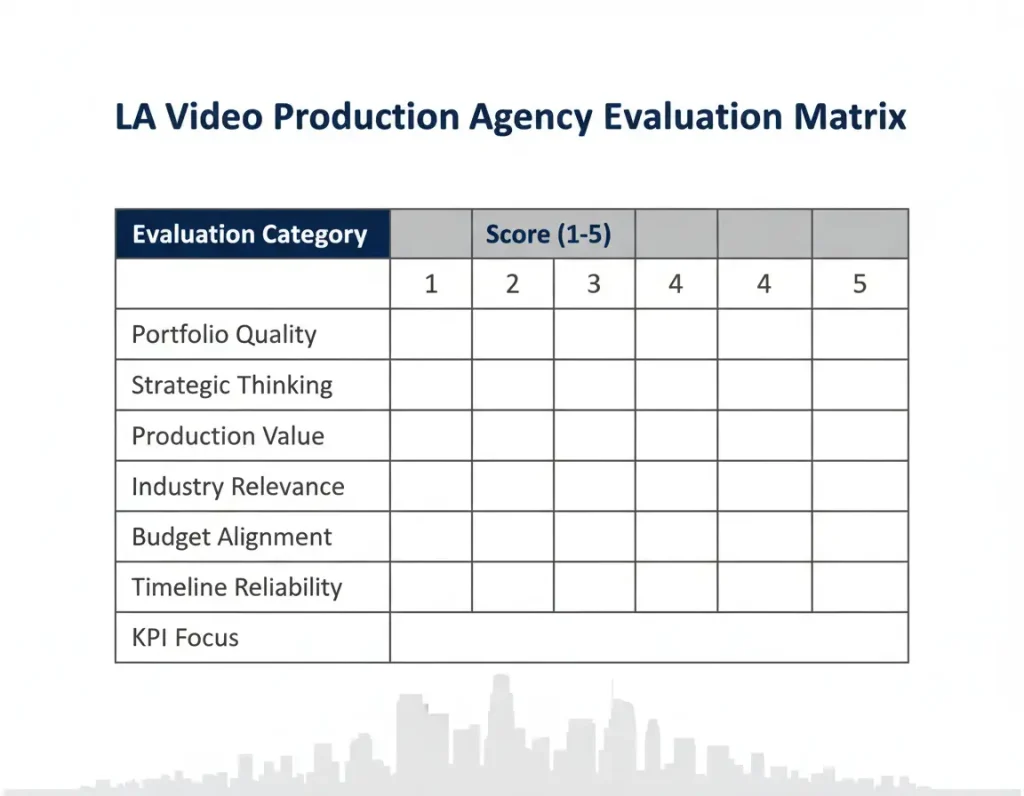
1. Portfolio Quality & Relevance
The Problem
A visually stunning reel can mask inconsistencies in execution.
The Risk
You hire based on style, not substance and discover mid-project that their excellence isn’t repeatable.
The Solution: Evaluate Beyond the Highlights
Assess:
Visual Storytelling
- Does the work tell a coherent story?
- Is there narrative structure or just strong visuals?
- Are pacing, sound design, and editing purposeful?
Production Value Consistency
- Is quality consistent across projects?
- Or does the reel feature only peak moments?
Relevance to Your Needs
- Have they handled similar industries or objectives?
- Can they adapt stylistically?
- Or do all projects look the same?
Executive Action Step:
Request full-length project samples not just the sizzle reel.
Ask to see raw footage from a comparable project to assess lighting, audio capture, and directorial control under real conditions.
2. Experience & Specialization
Years in Business & Core Team Stability
Longevity in Los Angeles matters. The market is competitive and volatile. Agencies that sustain operations demonstrate:
- Strong vendor networks
- Reliable crew relationships
- Financial stability
- Refined production workflows
Ask:
- How long have you been operating?
- Is your core creative team full-time or freelance?
- Who will actually work on my project?
Industry-Specific Expertise
Los Angeles’ diverse economy supports niche production houses specializing in:
- Tech startups (Silicon Beach corridor)
- Fashion and lifestyle brands
- Healthcare systems
- Real estate developers
- Entertainment ventures
- Non-profits and foundations
LA Niche Spotlight: Why Specialization Matters
An agency that deeply understands your vertical:
- Anticipates compliance issues (e.g., healthcare regulations)
- Understands buyer psychology in your sector
- Speaks your industry language
- Reduces onboarding friction
As one LA-based marketing strategist notes:
“In Los Angeles, niche expertise isn’t a luxury it’s leverage. Agencies embedded in specific industries understand audience nuance that generalists simply miss.”
If you operate in a highly regulated or culturally specific sector, specialization is a strategic advantage.
3. Communication Style & Responsiveness
The Problem
Creative misalignment rarely stems from talent gaps it stems from communication breakdown.
Evaluate Early Signals
- Response time to initial inquiry
- Clarity in written communication
- Willingness to ask clarifying questions
- Transparency in scope discussions
Essential Requirements
- A detailed project timeline
- Defined milestone approvals
- Clear revision limits
- Communication cadence (weekly check-ins, production calls, etc.)
Expert Recommendation:
Insist on a dedicated project manager.
A single point of accountability dramatically reduces operational friction.
Agencies without structured communication protocols often struggle at scale.
4. Client Testimonials & References
Published testimonials are curated.
What you need is unfiltered insight.
Ask For:
- 2–3 recent client references
- Clients from similar budget tiers
- Clients with comparable timelines
During Reference Calls, Ask:
- Did the project stay on budget?
- Were timelines honored?
- How were unexpected issues handled?
- Would you hire them again?
You are investing in a partnership not just a product.
5. Technical Capabilities & Equipment
Equipment does not create strategy but it does influence execution quality.
Assess:
- Camera systems used (cinema-grade vs. prosumer)
- Lighting inventory
- Audio recording standards
- Drone capabilities
- Post-production software
- In-house editing suites
In-House vs. Outsourced Services
Understand what is:
- Handled internally
- Outsourced to third-party vendors
This affects:
- Cost transparency
- Timeline control
- Quality oversight
Critical Question:
Describe your post-production workflow.
Who handles editing, color grading, sound design, motion graphics, and revisions?
Professional post-production separates polished executive-grade content from amateur outputs.
6. Understanding of Your Brand & Audience
This is where strategic alignment becomes evident.
Warning Sign
An agency that pitches creative ideas before deeply understanding your brand.
Positive Indicators
- They ask probing business questions
- They request brand guidelines
- They explore competitor positioning
- They inquire about past campaign performance
If they are not curious about your audience, they are not invested in your outcomes.
Prioritize agencies that demonstrate listening before presenting.
7. Creative Approach & Problem-Solving
Every production faces constraints:
- Weather
- Location changes
- Talent availability
- Budget limitations
What matters is adaptability.
Ask:
- Describe a project where something went wrong. How did you handle it?
- How do you manage change orders?
- How do you handle compressed timelines?
Innovative thinking under constraints distinguishes seasoned professionals from portfolio-builders.
8. Insurance & Legal Compliance
This is where sophisticated buyers differentiate themselves.
Liability Insurance
Confirm:
- General liability coverage
- Workers’ compensation
- Equipment insurance
Request a certificate of insurance if necessary.
Without coverage, your company may be exposed to financial and legal risk.
Intellectual Property (IP) & Usage Rights
Clarify in writing:
- Who owns the final edited video?
- Do you receive raw footage?
- Are music and stock assets licensed for your intended usage?
- Are there geographic or time-based restrictions?
Best Practice:
Ensure ownership of the final master file and clear licensing for distribution across all intended platforms.
Unclear IP agreements can severely restrict future marketing flexibility.
Executive Summary: Your Agency Evaluation Checklist
Category | Core Question | Risk if Ignored |
Portfolio | Is quality consistent and relevant? | Overpaying for isolated excellence |
Experience | Do they understand my industry? | Messaging misalignment |
Communication | Is workflow structured? | Delays & scope creep |
References | Are clients satisfied long-term? | Hidden reliability issues |
Technical | Are capabilities production-grade? | Subpar execution |
Brand Insight | Do they understand my audience? | Ineffective storytelling |
Legal | Is insurance & IP clear? | Financial and legal exposure |
In Los Angeles, creative talent is abundant. Strategic partners are not

3. The Vetting Process: From Research to Final Selection
Selecting a video production partner in Los Angeles is not a creative decision alone it’s a capital allocation decision. The risk is real: choosing the wrong agency can result in missed launch windows, budget overruns, diluted messaging, and measurable revenue loss. A disciplined, multi-phase vetting process reduces uncertainty and protects your investment.
The Core Concern “What If We Choose the Wrong Partner?”
You’re committing five sometimes six figures to a project with brand visibility and reputational impact.
A misaligned agency can:
- Misinterpret your objectives
- Inflate scope mid-project
- Deliver late
- Produce content that looks polished but performs poorly
Adopt a structured evaluation framework. Treat this like executive procurement not a creative experiment.
Phase 1: Initial Research & Shortlisting
1. Leverage Trusted Networks
Begin offline before going online.
- Executive peers
- Industry associations
- Local chambers of commerce
- Legal or marketing advisors
- Venture capital or investor networks
Referrals reduce unknown risk significantly.
2. Evaluate Online Presence Strategically
Review:
- Agency website case studies
- Social media channels
- Online directories such as Clutch
- Freelance marketplaces like Upwork (for smaller-scale projects)
- Google Reviews
- Yelp
Look for consistency across platforms. Discrepancies are signals.
3. Create a Shortlist
Using criteria from Sections 1 and 2:
- Portfolio relevance
- Industry specialization
- Company stability
- Initial communication responsiveness
Reduce your list to 5–10 qualified agencies.
This keeps the process competitive but manageable.
Phase 2: Crafting and Sending Your RFP
Why an RFP Matters
An RFP (Request for Proposal) forces clarity for both sides.
It ensures:
- Comparable responses
- Defined expectations
- Professional engagement
- Accountability from the start
Essential RFP Components
Include:
- Project overview
- Business objectives
- Target audience
- Key message and CTA
- Deliverables required
- Timeline
- Budget range
- KPIs for success
- Specific questions (see below)
Sample Strategic RFP Questions
- Describe your recommended creative approach and why it fits our objectives.
- Outline your production workflow from concept to delivery.
- Provide a detailed timeline with milestones.
- Identify the team members assigned to this project.
- Break down all projected costs by category.
- Clarify revision rounds included.
- Explain how you measure video performance post-launch.
Recommended Tool: RFP Checklist & Sample Question Bank
Develop a standardized checklist to ensure every proposal addresses identical evaluation criteria. This eliminates bias and improves comparability.
Phase 3: Interviews & Agency Demos
Once proposals are submitted, schedule formal interviews.
Treat this as both a capability review and cultural assessment.
What to Evaluate During Meetings
Communication Clarity
Are they concise? Structured? Strategic?
Team Chemistry
Will you work directly with the senior creatives or be handed to junior staff?
Process Transparency
Ask them to walk through:
- Pre-production planning
- Script approval
- Production logistics
- Post-production workflow
- Revision management
Key Interview Questions
- Describe a project that encountered major challenges. How did you resolve it?
- How do you manage scope changes?
- What happens if we exceed revision rounds?
- Who owns final creative approval on your side?
Creative Pitch Opportunity
Some agencies may present a preliminary concept.
This reveals:
- Strategic thinking
- Brand comprehension
- Audience awareness
- Differentiation capability
Avoid agencies that present generic, templated ideas.
Phase 4: Evaluating Proposals & Budget Breakdowns
This is where disciplined comparison matters most.
Comparative Analysis Framework
Evaluate proposals on:
- Alignment with your brief
- Strategic insight
- Creative originality
- Timeline feasibility
- Budget transparency
Transparent Pricing Is Non-Negotiable
Look for itemized breakdowns such as:
- Pre-production planning
- Scriptwriting
- Location fees
- Talent fees
- Crew day rates
- Equipment rentals
- Editing hours
- Color grading
- Sound design
- Licensing fees
Avoid lump-sum estimates without detail.
Red Flags vs. Green Lights
Red Flags
- Vague proposals
- No detailed cost breakdown
- Failure to address your objectives directly
- Poor grammar or careless presentation
- Slow response times during vetting
- Resistance to clarifying deliverables
- No defined revision limits
These behaviors during courtship rarely improve post-contract.
Green Lights
- Structured, detailed proposals
- Clear milestone timeline
- Itemized budget
- Relevant case studies
- Insightful questions about your brand
- Proactive communication
- Defined deliverables and revision policy
Professionalism during vetting predicts professionalism during execution.
Recommended Tool: Budget Planning Worksheet
Use a side-by-side spreadsheet comparing:
Cost Category | Agency A | Agency B | Agency C |
Pre-Production | |||
Production | |||
Post-Production | |||
Licensing | |||
Contingency | |||
Total Investment |
This makes value differences visible beyond headline price.
Phase 5: Reference Checks & Due Diligence
Never skip this step.
Speak Directly With Past Clients
Request at least 2–3 recent references.
Ask:
- Did the project stay within budget?
- Were timelines honored?
- How were unexpected challenges handled?
- Was communication consistent?
- Would you hire them again?
Listen carefully to hesitation.
Conduct a Broader Online Review
Review:
- Google Reviews ratings
- Yelp feedback
- Press mentions
- LinkedIn activity
- Recent project announcements
Consistency across sources builds confidence.
Phase 6: Making Your Final Decision
This is not purely a financial decision.
A lower bid may signal:
- Smaller crew
- Limited post-production
- Outsourced services
- Reduced revision rounds
Your final decision should consider:
- Portfolio strength
- Industry expertise
- Strategic alignment
- Communication clarity
- Budget transparency
- Cultural compatibility
Trust your judgment about partnership chemistry but ground it in structured evaluation.
Comparative Agency Proposal Assessment Table
Evaluation Criteria | Agency A | Agency B | Agency C |
Portfolio Relevance | |||
Strategic Alignment | |||
Creative Strength | |||
Budget Transparency | |||
Timeline Feasibility | |||
Communication Quality | |||
References Feedback | |||
Legal & Insurance Clarity | |||
Overall Confidence Score (1–10) |
Final Perspective
In Los Angeles, creative talent is abundant disciplined execution is not.
By following this structured vetting framework, you transition from reactive selection to strategic procurement.
4.Navigating LA-Specific Considerations in Video Production
The Unique Landscape of Filming in Los Angeles
Producing video in Los Angeles offers unmatched creative upside and operational complexity.
Unlike secondary production markets, LA operates at the intersection of entertainment, advertising, tech, and media infrastructure. That density creates access to elite resources but also layered regulations, union frameworks, and logistical realities that directly impact your timeline and budget.
For a business leader making a substantial investment, understanding these local nuances is not optional. It’s risk management.
The Core Concern: Legal & Logistical Exposure
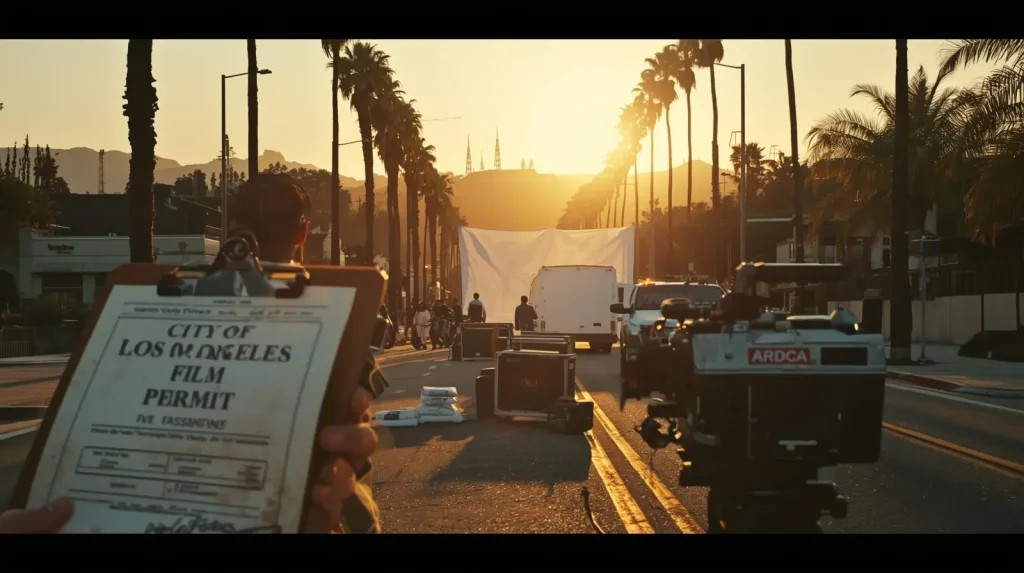
Filming in LA often requires permits, releases, insurance certificates, and union compliance. Failure to secure proper approvals can result in:
- Production shutdowns
- Fines
- Legal disputes
- Distribution limitations
- Budget overruns
Partner with an agency that demonstrates fluency in LA’s regulatory ecosystem not one learning it on your dime.
Permits & Regulations for Filming in Los Angeles
FilmLA: The Gatekeeper
FilmLA is the official film office for the City and County of Los Angeles. Most commercial productions require permits processed through this agency.
Permits may be required for:
- Public streets and sidewalks
- Parks and beaches
- Government buildings
- Street closures
- Drone operations
- Certain private properties with public impact
A competent agency will:
- Determine permit requirements early
- Budget permit fees accurately
- Coordinate police or parking control if needed
- Manage insurance documentation
Neighborhood Considerations
Los Angeles neighborhoods operate differently. What works in Downtown may not work in Venice or Hancock Park.
Key factors:
- Noise ordinances
- Parking restrictions
- Residential filming limitations
- Community notifications
- Restricted filming hours
Agencies with strong local relationships navigate these issues efficiently protecting your production schedule.
Recommended Legal Resources
Before greenlighting a project, ensure your agency references:
- FilmLA official permit guidelines
- SAG-AFTRA documentation (if using union talent)
- City and County filming compliance regulations
Due diligence at this stage prevents legal friction later.
Access to Diverse Talent Pools
Unrivaled Professional Talent
Los Angeles contains the deepest concentration of:
- Professional actors
- Directors of Photography (DPs)
- Gaffers
- Sound mixers
- Production designers
- Editors and colorists
- VFX and motion graphics specialists
This density creates optionality. You are not limited to generalists you can secure category experts aligned with your industry.
Union vs. Non-Union Talent
One of the most significant LA-specific considerations is whether to work with union actors through SAG-AFTRA.
Union (SAG-AFTRA) Talent
Advantages:
- Professional reliability
- Established rate structures
- High performance standards
Considerations:
- Strict compensation minimums
- Residual requirements in some cases
- Defined working conditions
- Paperwork and reporting obligations
Non-Union Talent
Advantages:
- Greater budget flexibility
- Fewer regulatory requirements
Considerations:
- Variable experience levels
- Potential performance inconsistencies
As one LA-based casting director explains:
“The power of Los Angeles is choice. If you need nationally recognized talent with guaranteed professionalism, union actors are invaluable. If you need agile, budget-conscious flexibility, non-union casting can deliver but you must vet carefully.”
Your agency should clearly explain these trade-offs before budgeting talent.
Location Scouting & Logistics in a Sprawling City
Iconic & Diverse Backdrops
Few cities offer the geographic diversity of Los Angeles:
- Coastal beaches
- Mountain terrain
- Industrial districts
- Modern corporate skylines
- Historic architecture
- High-end residential neighborhoods
A skilled location manager can elevate production value without excessive set construction.
Traffic & Travel: A Real Budget Variable
Los Angeles traffic is not anecdotal it’s operational.
Poor scheduling can result in:
- Overtime labor costs
- Crew fatigue
- Equipment rental overruns
- Delayed setups
Professional agencies build schedules that:
- Cluster locations geographically
- Avoid peak traffic windows
- Allocate realistic load-in and load-out time
The Value of Experienced Location Managers
Agencies with established LA networks often maintain:
- Pre-cleared filming locations
- Relationships with property owners
- Permit-friendly alternatives
- Fast-track approval channels
This saves time and reduces contingency spend.

Industry Niches & Specialized Equipment Concentration of Expertise
Because LA houses major advertising agencies, studios, tech firms, and fashion brands, it also supports hyper-specialized production capabilities.
Examples include:
- High-speed automotive rigs
- Motion control systems
- Virtual production stages
- LED volume walls
- Advanced drone cinematography
- Luxury fashion set design
- Healthcare-compliant production workflows
Few markets offer this depth of specialization.
Access to Cutting-Edge Gear
Many LA agencies have immediate access to:
- Cinema-grade camera systems
- Advanced lighting packages
- Aerial drone fleets
- High-end post-production suites
- Dolby-certified audio facilities
Equipment alone doesn’t guarantee results but access reduces compromise.An agency’s local vendor network directly impacts production quality and cost-efficiency. Strong relationships often translate to preferential rates and priority scheduling.
The “LA Advantage” for Your Brand Leveraging Local Talent & Technology Strategically
Choosing a Los Angeles-based production agency offers:
- Access to elite creative professionals
- Diverse filming environments within short travel distances
- Advanced production infrastructure
- Established permitting pathways
- Union and non-union casting flexibility
- High-end post-production ecosystems
When properly leveraged, this ecosystem elevates:
- Brand credibility
- Production value
- Audience perception
- Market differentiation
For businesses targeting national or global markets, LA production quality often carries implicit authority.
Executive Takeaway
Filming in Los Angeles is not inherently more complicated but it is more structured.
Agencies that understand permits, unions, logistics, and location strategy transform potential friction into competitive advantage.
5. Common Pitfalls to Avoid When Hiring an Agency
Even in a sophisticated market like Los Angeles, businesses routinely repeat the same avoidable mistakes when selecting a video production partner.
The cost of these errors isn’t just financial. It’s lost opportunity, diluted brand equity, and internal friction.
This section is designed to help you sidestep the traps that derail otherwise strong projects.
The Core Fear: “What If We Get This Wrong?”
You’re investing serious capital. The brand visibility is high. Internal stakeholders are watching.
The solution isn’t over-analysis it’s awareness.
Below are the most common and costly pitfalls and how disciplined executives avoid them.
Pitfall 1: Focusing Solely on Price
A lower bid is psychologically attractive especially under budget pressure.
Cheap proposals often mean:
- Smaller or less experienced crews
- Minimal pre-production planning
- Limited revision rounds
- Outsourced post-production
- Hidden add-on costs later
You may save upfront but pay more in revisions, delays, or underperformance.
The Strategic Shift: Value Over Cost
Evaluate:
- Quality consistency
- Strategic alignment
- Transparency in pricing
- Experience in your industry
- Post-production sophistication
A $40,000 project that generates measurable ROI outperforms a $15,000 video that fails to convert.
Executive Standard:
Choose value density, not the lowest invoice.
Pitfall 2: Vague or Undefined Project Scope
Internal ambiguity becomes external confusion.
Without a clear scope:
- Creative direction drifts
- Deliverables multiply
- Deadlines shift
- Budgets expand
- Frustration rises
This is classic scope creep.
Invest time upfront in:
- Defined objectives
- Clear deliverables
- Specified video length
- Platform distribution clarity
- Revision limits
Your internal brief (from Section 1) is your first line of defense. Clarity protects budget.
Pitfall 3: Superficial Portfolio & Reference Review
You’re impressed by a highlight reel and glowing testimonials.
Reels show peak moments not full project execution.
Without deeper review, you may miss:
- Inconsistent editing quality
- Weak narrative structure
- Limited strategic insight
- Poor project management history
Request:
- Full-length project samples
- Comparable industry work
- Raw or unpolished examples
- Direct client references
When speaking with references, ask:
- Did they stay within budget?
- How did they handle setbacks?
- Was communication consistent?
- Would you rehire them?
Direct conversations reveal far more than curated reviews.
Pitfall 4: Poor Communication & No Dedicated Project Manager
Creative breakdowns often stem from operational breakdowns.
Without structured communication:
- Feedback cycles become chaotic
- Deadlines slip
- Accountability blurs
- Creative alignment deteriorates
Require:
- A detailed production timeline
- Defined milestones
- Clear revision structure
- Scheduled status updates
- A dedicated project manager
A single point of contact dramatically reduces friction.
Professional Standard:
If communication is disorganized during the sales process, it will not improve after the contract is signed.
Pitfall 5: Skipping Thorough Contract Review
Excitement about the creative vision leads to rushed contract review.
Ambiguity in contracts leads to disputes over:
- Deliverables
- Timeline extensions
- Revision rounds
- Payment schedules
- Intellectual property ownership
In a production-heavy market like Los Angeles, legal precision matters.
Have legal counsel review the agreement.
Ensure clarity on:
- Scope of work
- Milestone payments
- Ownership of final edited video
- Rights to raw footage
- Music and stock licensing
- Termination clauses
- Change order procedures
Recommended Tool: Video Production Contract Review Guide
Develop or obtain a structured checklist covering:
- Deliverable definitions
- Revision caps
- Overtime policies
- Licensing limitations
- Liability coverage
- Insurance certificates
- Indemnification clauses
Critical Negotiation Tip:
Lock revision limits and deliverables into the contract. Vague language here almost guarantees additional cost later.
Pitfall 6: Treating the Project as a One-Off Transaction
You approach the engagement as a single deliverable not a strategic relationship.
This short-term mindset leads to:
- Inconsistent brand visuals across campaigns
- Repeated onboarding costs
- Loss of brand familiarity
- Missed long-term strategic alignment
The Opportunity: Future-Proof Your Video Strategy
Strong agencies can:
- Develop scalable content frameworks
- Create reusable brand assets
- Repurpose footage across platforms
- Adapt content to emerging formats
- Support ongoing campaign strategy
Think beyond the immediate deliverable.
Beyond the Reel: Vetting for True Partnership & ROI
The shift in mindset is simple:
You are not hiring a vendor.
You are selecting a creative partner.
In a sophisticated ecosystem like Los Angeles, the agencies that deliver sustained ROI are those that:
- Understand your growth objectives
- Ask difficult strategic questions
- Maintain operational discipline
- Demonstrate financial transparency
- Invest in long-term collaboration
Chemistry matters. So does competence.
The right partner should make you feel confident not anxious about the investment.
Executive Recap: Avoid These Mistakes
Pitfall | Business Impact | Preventative Action |
Choosing lowest price | Underperformance & hidden costs | Evaluate value, not cost |
Undefined scope | Scope creep & delays | Build detailed brief |
Surface-level vetting | Misaligned expectations | Review full projects & references |
Weak communication | Project breakdown | Require PM & structured updates |
Skipping contract review | Legal & financial disputes | Legal review & clause clarity |
One-off mindset | Brand inconsistency | Vet for long-term partnership |

6. Understanding Video Production Costs in LA: What to Expect
Demystifying LA’s Video Production Costs
In Los Angeles, video production pricing can range from modest five-figure projects to six-figure campaigns. That variability creates uncertainty and uncertainty makes decision-making harder.
For a business leader managing capital responsibly, the key is not chasing the lowest quote. It’s understanding where your money goes, what drives cost, and how to optimize for return.
This section breaks down typical cost components so you can budget strategically and avoid surprises.
The Core Concern: “Are We Paying a Fair Price?”
Problem:
Pricing varies dramatically between agencies.
Agitation:
Without clarity, you risk:
- Overspending on unnecessary production layers
- Underfunding critical elements
- Encountering hidden fees
- Misjudging value
Solution:
Understand the anatomy of a professional production budget.
Key Cost Components of Video Production
Video budgets typically fall into three major phases: Pre-Production, Production, and Post-Production.
1. Pre-Production
This is strategy and preparation the foundation of success.
Concept Development & Scriptwriting
- Creative ideation
- Messaging development
- Script drafts
- Storyboarding
Strong pre-production reduces expensive reshoots.
Casting
- Casting director fees
- Auditions
- Talent sourcing
- Negotiations
In LA, access to talent is deep but rates vary significantly depending on union status and experience.
Location Scouting & Permits
Permits are often processed through FilmLA when shooting in public or regulated spaces.
Costs may include:
- Permit fees
- Police lockups
- Parking control
- Location manager time
Scheduling & Logistics
Project management hours for:
- Coordinating crew
- Equipment booking
- Securing talent
- Building production schedules
Skimping here often increases downstream costs.
2. Production (Shoot Days)
This is typically the most visible and expensive phase.
Crew
Common roles include:
- Director
- Director of Photography (DP)
- Assistant Director
- Gaffer
- Grip team
- Sound recordist
- Production assistants
In Los Angeles, day rates can be higher due to market demand and union standards.
Equipment Rental
- Cinema cameras
- Lenses
- Lighting packages
- Audio gear
- Drone systems
- Specialty rigs (jibs, dollies, stabilizers)
High-end gear improves flexibility and image quality but must align with project goals.
Talent Fees
Rates depend on:
- Experience level
- Usage rights
- Duration of campaign
- Union affiliation (e.g., SAG-AFTRA talent vs. non-union)
Union talent brings professionalism but adds structured rate minimums.
Location Fees
Private properties, studios, and commercial venues charge rental rates that vary widely by neighborhood and prestige.
Catering & Craft Services
Feeding a professional crew is not optional and is often contractually required.
Travel & Accommodation
If filming outside core LA zones, factor in transportation and lodging.
3. Post-Production
This is where your story comes together.
Editing
Includes:
- Rough cut assembly
- Fine cuts
- Client feedback implementation
- Final export
Complex narratives require more editorial hours.
Motion Graphics & Visual Effects
- Animated logos
- Data visualization
- Lower thirds
- Advanced compositing
High-end animation significantly affects budget.
Sound Design & Mixing
Professional audio polish includes:
- Dialogue cleanup
- Sound effects layering
- Music mixing
- Final mastering
Weak audio undermines even strong visuals.
Color Grading
Professional color correction ensures consistency and cinematic polish.
Music Licensing
Options include:
- Royalty-free tracks
- Premium licensed music
- Custom composition
Usage rights affect cost.
Voice-Over Recording
Studio rental and voice talent fees vary based on experience and distribution usage.
4. Miscellaneous Costs
- Platform-specific formatting
- Broadcast compliance delivery
- Additional revision rounds
- Hard drive delivery or archival
Always clarify what is included.
Typical Pricing Models in Los Angeles
Understanding pricing structures prevents misinterpretation.
Project-Based Flat Fee
A comprehensive price based on defined scope.
Best for:
- Clearly scoped projects
- Fixed deliverables
- Defined timelines
Day Rates
Often used for:
- Crew
- Equipment
- Studio rentals
More common in flexible or evolving productions.
Retainer Model
Ideal for ongoing content needs.
Monthly fee may cover:
- X number of shoot days
- Editing hours
- Social content packages
For companies with recurring video demand, this stabilizes cost.
Smart Budgeting Strategies
1. Be Transparent About Budget
Disclose your range upfront.
Experienced agencies can scale creative to meet financial boundaries but they cannot read your mind.
2. Prioritize What Drives Impact
Decide early:
- Is celebrity talent essential?
- Is high-end cinematography the differentiator?
- Are motion graphics critical?
- Is speed-to-market more important than polish?
Allocate capital intentionally.
3. Require Itemized Quotes
Avoid lump-sum pricing.
Clear line items allow:
- Apples-to-apples comparison
- Strategic negotiation
- Informed trade-offs
4. Clarify Revision Rounds
Ask explicitly:
- How many revision rounds are included?
- What triggers additional billing?
Revision creep is a common cost driver.
5. Evaluate ROI, Not Just Cost
A well-produced brand video can:
- Improve conversion rates
- Increase lead quality
- Enhance investor confidence
- Strengthen recruitment outcomes
Measure expected return against spend.
Mini Case Study: Smart Budget Allocation in LA
A mid-sized SaaS company headquartered in Los Angeles invested approximately $65,000 in a product explainer campaign.
Instead of allocating heavily to celebrity talent, they prioritized:
- Strong script development
- High-end motion graphics
- Clear CTA integration
- Professional sound design
The video was deployed on:
- Homepage
- LinkedIn paid campaigns
- Sales presentations
Results over six months:
- 28% increase in landing page conversion
- 19% reduction in sales cycle length
- Significant improvement in demo booking rates
The ROI significantly exceeded production cost.
The lesson: intelligent allocation beats inflated spectacle.
Recommended Tool: Budget Planning Worksheet
Develop a structured spreadsheet to:
- Allocate funds by category
- Compare agency quotes side-by-side
- Track contingency allocations
- Monitor change orders
Transparency converts uncertainty into control.
Executive Takeaway
Video production in Los Angeles is not inherently expensive it is scalable. When you understand:
- Cost drivers
- Talent structures
- Union considerations
- Permit requirements
- Post-production complexity
You move from reactive budgeting to strategic investment.
FAQs About Hiring a Video Production Agency in Los Angeles
How long does a typical video production project take in LA?
It depends on complexity.
- Simple social media video: 2–4 weeks
- Brand story or mid-level commercial: 6–10 weeks
- Large-scale commercial or multi-location campaign: 2–4+ months
Where the time really goes:
Pre-production is often the longest phase. Concept development, scripting, casting, location scouting, and permits (often coordinated through FilmLA) require approvals and scheduling precision.
Practical guidance:
If you have a hard launch date (product release, funding announcement, trade show), work backward at least 8–12 weeks for anything beyond a simple talking-head piece.
What’s the difference between a video production company and a marketing agency that offers video?
This distinction impacts both cost structure and strategic alignment.
Video Production Company
- Specializes in creative execution and technical production
- Strong in cinematography, directing, lighting, post-production
- Ideal if you already have strategy and need premium execution
Marketing Agency (with video services)
- Focuses on campaign strategy, messaging, and distribution
- May outsource production to third parties
- Ideal if you need full-funnel planning and media deployment
Decision framework:
If your primary concern is production quality and storytelling craft, prioritize a production company. If ROI attribution, paid media, and campaign orchestration are the priority, ensure strategic marketing expertise is central.
Do I need to provide the script or concept?
No but you must provide clarity.
Most reputable agencies offer full-service creative development, including:
- Concept ideation
- Scriptwriting
- Storyboarding
What you must provide is a concise business brief:
- Target audience
- Core objective (awareness, conversion, investor trust, recruitment, etc.)
- Key message
- Budget range
- Distribution plan
Without this, even the best creative team will miss the mark.
What if I don’t like the first draft of the video?
This is where disciplined process protects your investment.
Problem: Misalignment after first cut.
Root cause: Vague brief or undefined revision structure.
Solution:
- Ensure the contract defines:
- Number of revision rounds (commonly 2–3)
- What constitutes a “revision” versus a scope change
- Provide feedback tied directly to agreed objectives not subjective taste.
Expert Tip:
Negotiate deliverables and revision rounds explicitly. Ambiguity here is the primary cause of scope creep and cost overruns in LA productions.
How involved do I need to be in the production process?
Your involvement should be strategic not constant.
High involvement:
- Concept approval
- Script approval
- Casting decisions
- Final cut sign-off
Moderate involvement:
- Post-production review rounds
Minimal involvement:
- Actual shoot days (unless brand representation is critical)
If you’re a senior executive, appoint one internal decision-maker to avoid conflicting feedback loops that delay timelines.